
IDS Fall 2025-2026 Applications Are Now Open!

IDS Fall 2025-2026 Applications Are Now Open!

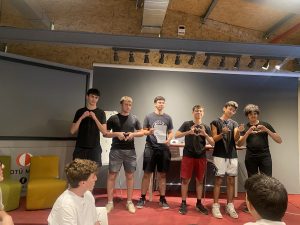
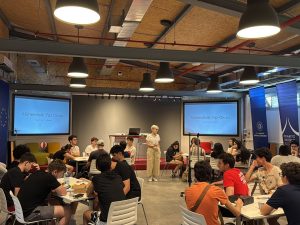
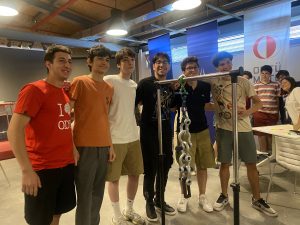
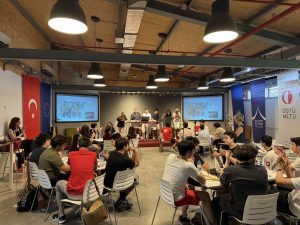
The Interdisciplinary Design Studio (DTS) is a series of events consisting of seminars, workshops, and studios that support collaboration among participants from different disciplines. Coordinated by the METU Design Factory and carried out under the mentorship of professors from various departments, DTS is designed as a course in partnership with industry and civil society organizations operating in different sectors, primarily METU Technopolis.

DTS will be offered as an elective course at METU under the name Interdisciplinary Problem Solving (BA148), open to students from all departments, and will take place on Fridays at 16:40.

Students who wish to participate in the course are required to fill out the application form via the link below:

👉 [Application Form Link]

TÜBİTAK 1001: Development of a novel approach to hospital soundscapes incorporating an artificial intelligence (AI) model to predict users’ perception

Hospitals are one of the significant public spaces for receiving healthcare services. Therefore, hospitals should be designed to enhance the relaxation and well-being of patients, their relatives, and healthcare workers. To guide the design of a comfortable hospital environment, the user’s spatial perception must be correctly understood, and the emotional and perceptual clusters must be accurately captured. The proposed project aims to prepare a large dataset based on how users describe their hospital space/experiences/perceptions in their natural languages and to train an artificial intelligence (AI) model using natural language processing models. Parallel to this process, a Turkish database oriented towards hospital perception will be created, which will be one of the significant contributions of the project. This data will be used to retrain the model and obtain the components that form the perception. Similar data engineering will be done by collecting hospital interior photos and descriptions to complete the big data.

The hypothesis of the proposed project is as follows: while auditory perception in hospitals is a critical perception, there may be other factors/dimensions behind this perception depending on the user’s usage. Artificial intelligence models can reveal these underlying and missing perceptual dimensions. Tracing these factors and dimensions and identifying the missing/invisible parts can provide holistic clues for improving auditory perception and thus the hospital environment. It can answer the question of whether there is an unseen trace in the decision-support mechanism. This hypothesis will be investigated with four research questions: (1) Can the pre-prediction of the hospital auditory soundscape be made without visual-auditory stimulus data using natural language models? (2) How does the audio-visual environment in the hospital affect oncology clinic patients, their relatives, and healthcare personnel? (3) Is there any significant relationship between the psychoacoustic metrics of the acoustic environment in the hospital and the perceptual dimensions? (4) Can topics and perception clusters of participants be formed with the data collected from interviews with patients, their relatives, and healthcare personnel in the hospital?

As a method, two work packages will be conducted in parallel, and validations and gap fillings will be done with feedback data sharing. In WP1, text data in the literature and open-source datasets about the hospital soundscape will be analyzed using the BERTopic model based on the BERT (Bidirectional Encoder Representations from Transformers) language representation model developed by Google Language AI. It is aimed to establish a system where these data are combined with the visual data of the space using BERTopic and many other current models, ensuring the audio-visual integrity and relationships are present, trained, and the prediction model is created in the system. In WP2, face-to-face interviews/questionnaire surveys with hospital users (patients, their relatives, and healthcare personnel) will be conducted to determine what the hospital auditory perception is in real architectural space (example of Ankara City Hospital Oncology Clinic). Psychoacoustic metrics will be calculated by processing the sound recordings obtained from the oncology clinic. Qualitative and quantitative data correlations will be made with the qualitative state descriptions provided by the user’s subjective perception and the psychoacoustic metrics, which objectify the spatial perception. It is aimed to reveal/figure out the missing or background spatial perception by monitoring the data coming from the AI model in support of the qualitative-quantitative evaluations in the Oncology Clinic with tools measuring the hospital auditory soundscape.

One of the main outputs of the research project, the Turkish database, has the potential to grow as additions are made. The project output, which will work interactively, will feed the original AI model with the Turkish database, and as the number of architectural space cases increases and user interviews are decoded, our local database will develop further. This will be a very important database for our country as well. The proposed research is a study with great potential to create a audio-visual archive. Many researchers will be able to benefit from this database and audio-visual archive and prepare publications.

Project Team

Semiha Yılmazer, Project Coordinator, Hasan Kalyoncu University
Arzu Gönenç Sorguç, Researcher, METU Design Factory
Müge Kruşa Yemişcioğlu, Researcher, METU Design Factory
Serkan Alkan, Advisor, METU Design Factory
Aslı Z. Doğan, PhD Student, METU
Emire Nur Solmaz, PhD Student, METU
Cengiz Yılmazer, Advisor

Funding
METU Design Factory Joins the European Innovation Ecosystem with TECH2X Project

METU Design Factory Joins the European Innovation Ecosystem with TECH2X Project

We are proud to share that our project “TECH2X – Technology for Innovation and Entrepreneurship Excellence,” in which ODTÜ Design Factory is a partner, has been selected for funding under the @EIT Higher Education Initiative 2024 Call!

The project aims to enhance the innovation and entrepreneurship capacities of higher education institutions, strengthen deep-tech competencies, and support the transition toward the 4th generation university model in Europe.

In addition to METU from Türkiye, TECH2X brings together leading universities and research institutions including Fundación Esade (Spain), Alma Mater Studiorum Università di Bologna (UNIBO) and the innovation center Almacube (Italy), Hochschule Mannheim (HSMA – Germany), and CERN (Switzerland). Through application-based collaborations focusing on climate and mobility, TECH2X seeks to build a science-driven innovation and entrepreneurship platform across Europe.

Within the scope of the project, new curricula, challenge-based learning methodologies, and dedicated support programs for women entrepreneurs will be developed, while strengthening collaboration between higher education, research, and industry.

With TECH2X, ODTÜ Design Factory aims to expand its international partnerships and contribute significantly to the innovation and entrepreneurship ecosystem.

A Strategic Move for Creative Industries at METU: Opening Ceremony of METU Crea

A Strategic Move for Creative Industries at METU: Opening Ceremony of METU Crea

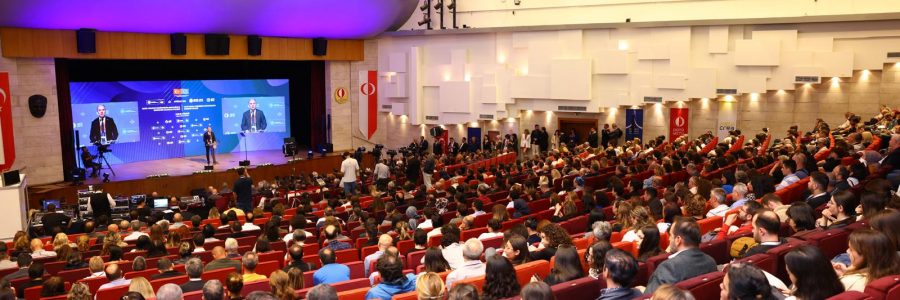
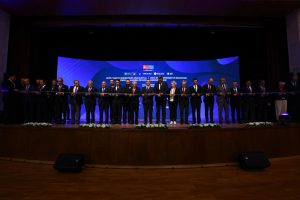
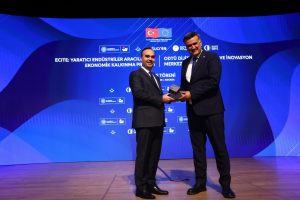
Middle East Technical University hosted the launch of two significant new projects in the fields of creative industries and digital transformation. During a ceremony held at the METU Culture and Convention Center, METU Crea and the METU-DTX were officially inaugurated.

Established under the "Economic Development through Creative Industries (ECITE)" Project, which is co-financed by the European Union and the Republic of Türkiye and managed by the Ministry of Industry and Technology, METU Crea aims to provide technical infrastructure, training, and collaboration opportunities to SMEs, entrepreneurs, and creative professionals working in areas such as gaming, wearable technologies, and next-generation filmmaking.

Developed with the contributions of METU Design Factory, GİSAM, and ATOM, METU Crea creates a multi-stakeholder ecosystem to support the growth of the creative sectors. With its interdisciplinary production culture and practice-based design approach, the METU Design Factory stands out as a cornerstone of METU Crea. It plays a key role in enhancing the competitiveness of Türkiye’s creative industries through its infrastructure that enables the transformation of creative ideas into prototypes and its mentoring processes.


Design Factory at METU Engineering Summer School

Design Factory at METU Engineering Summer School

Middle East Technical University (METU) brings high school students together with the creative and dynamic world of engineering through its Engineering Summer School. Launched with the slogan “Code Your Future at METU,” the program offers students the opportunity to learn the basic principles of fields such as space technologies, robotics, artificial intelligence, nanotechnology, and earthquake engineering, while also gaining hands-on experience in advanced technology laboratories.

One of the courses in the program, “BIOINSPIRED 101: Nature-Inspired Designs,” will have its practical component conducted at the METU Design Factory. In this course, students will develop an innovative perspective on engineering and design by drawing inspiration from the perfect systems and forms found in nature. Under the guidance of Prof. Dr. Arzu Gönenç Sorguç, participants will have the chance to produce their own nature-inspired models using 3D printers.

At the end of the two-week summer school, students will receive a METU-certified certificate of participation. The program offers a unique experience for young people interested in engineering, providing both knowledge and skills development as well as social interaction.

For high school students who want to build the future of their dreams, the METU Summer School is an inspiring starting point.

More information and applications:
https://metusummerschool.org/

Computational Methods and AI-Assisted Design of Acoustically Performative Generative Panel Systems

Computational Methods and AI-Assisted Design of Acoustically Performative Generative Panel Systems

In recent years, with regulations and awareness raising activities of health organizations, prevention of noise pollution and the management and control of environmental noise have become increasingly important. At the same time, collective use areas such as common spaces and multi-purpose halls have started to gain more and more importance. However, the rethinking of how to use these common areas more rationally, especially with the recent COVID-19 processes, has created a potential at the intersection of these two situations. Acoustic design proposals, which have mostly been suggested in the literature to respond to a constant need, have been addressed as an adaptive solution in this research. In this context, an absorber panel system has been proposed to respond to different usage scenarios and different acoustic performance needs. In the proposed three-stage research, it is planned to first create the parametric model of the system and then create the generative system with artificial intelligence supporting computational design tools in this model. Finally, design alternatives are fabricated by additive manufacturing technologies.

Project Team

Arzu Gönenç Sorguç, Muge Krusa Yemişcioğlu, Ozan Yetkin

Funding
ECITE Pitching Event: Creative Projects Took the Stage

ECITE Pitching Event: Creative Projects Took the Stage

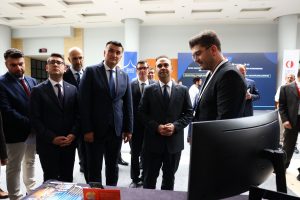
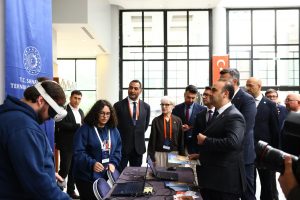
As part of the project “Games, Wearable Technologies, and Next-Generation Films: Economic Development through Creative Industries (ECITE),” creative projects took the stage following a gathering held at the METU Design Factory.

At the ECITE Pitching Event, project developers working in the fields of film, games, and wearable technologies had the opportunity to present their ideas to industry professionals, representatives from the entrepreneurship ecosystem, and members of the creative community. Organized under the leadership of METU Crea, participants introduced their projects, received feedback, and took the first steps toward potential collaborations.

The event was not limited to the sharing of creative ideas; it also provided a platform that fostered cross-sectoral interaction and a culture of multidisciplinary production. METU Crea continues to support creative industries and host projects that bring together technology and art.

Intersection of Creativity and Technology: The ECITE Project Brought Industries Together at METU Design Factory

Intersection of Creativity and Technology: The ECITE Project Brought Industries Together at METU Design Factory

As part of the "Games, Wearable Technologies, and Next-Generation Films: Economic Development through Creative Industries (ECITE)" project, project developers gathered at the METU Design Factory.

METU Crea, which bridges the film, gaming, and wearable technology sectors, continues to bring together technology and creativity, generating future-oriented solutions and opportunities. Through the work carried out under the ECITE project, METU Crea extends its impact beyond academic circles via strategic partnerships, supporting project developers in interacting with global industry leaders, tech startups, and creative communities.

During this gathering, project developers had the opportunity to meet with the METU Crea team, share their experiences, and exchange ideas about their future goals, visions, and expectations.

Noise Removal in Building Documentation by Generative Adversarial Networks

Noise Removal in Building Documentation by Generative Adversarial Networks

In our day, it is possible to document existing buildings and transfer to digital medium in 3D owing to the advancements in the technology. In the course of this transfer, temporary, permanent or seasonal obstacles may reside between buildings and data capturing devices regardless of the method of data collection and as a result preventing the precise and correct documentation of the buildings. In the scope of this project, it is aimed to obtain high precision 3D models reflecting the real case of buildings with the utilization of deep learning based models to clear these obstacles which can be regarded as noise in the data autonomously. In this context, a method which the noise in building photos are autonomously detected and noise regions are inpainted with respect to the building for 3d reconstruction software from multiple photos is proposed. Semantic segmentation and generative adversarial networks based inpainting models are utilized in an end-to-end manner. The testing of the proposed method is conducted in both indoor spaces and building facades and the results revealed an increase in the precision of the 3D models with respect to the models obtained from unprocessed photos.

Project Team

Arzu Gönenç Sorguç, Çağlar Fırat Özgenel

Funding

EU-Funded KPI Project from METU Design Factory: CoARA

EU-Funded KPI Project from METU Design Factory: CoARA

We are proud to announce that METU Design Factory, an interdisciplinary R&D center operating under Middle East Technical University, has been selected for funding by the European Union to lead a pioneering initiative aimed at developing and piloting qualitative Key Performance Indicators (KPIs) for research assessment in the creative industries.

The project will be implemented under the umbrella of METU Crea, focusing on three rapidly evolving creative sectors: new-generation filmmaking, game development, and wearable technologies. Leveraging the applied research capacity of METU Design Factory and its expertise in creative ecosystems, the initiative aims to establish a scalable and responsible model for evaluating creative research outputs.

In line with the principles of the Agreement on Reforming Research Assessment (ARRA), the project centers on qualitative evaluation methods, supported by the careful use of quantitative indicators. Through stakeholder workshops and collaborations with experts from Türkiye and various European countries, KPIs will be defined to reflect innovation, societal impact, and creative excellence.

These indicators will be tested through pilot implementations in selected research projects within METU Crea, accompanied by comprehensive training programs for researchers and evaluators. The project will also draw on methodologies and insights developed by CoARA working groups, contributing to the transformation of research assessment systems across Europe.

With the strong institutional support of METU and its academic community of over 2,500 faculty members, METU Design Factory continues to play an active role in shaping inclusive, impact-driven, and forward-looking research environments.